

Pirxey stopped fitting
the company
to the tool.
Pirxey, a company with 70+ engineers, built a custom internal operating system. Time tracking as the first module, built in ~20 working days, AI‑native from day one. The foundation for the company’s full OS.
dev, one
pair of hands

AI-native software house from Gdańsk, 70+ engineers, digital products since 2018. pirxey-os is their internal operating system, used company-wide since July 2026.
pirxey.com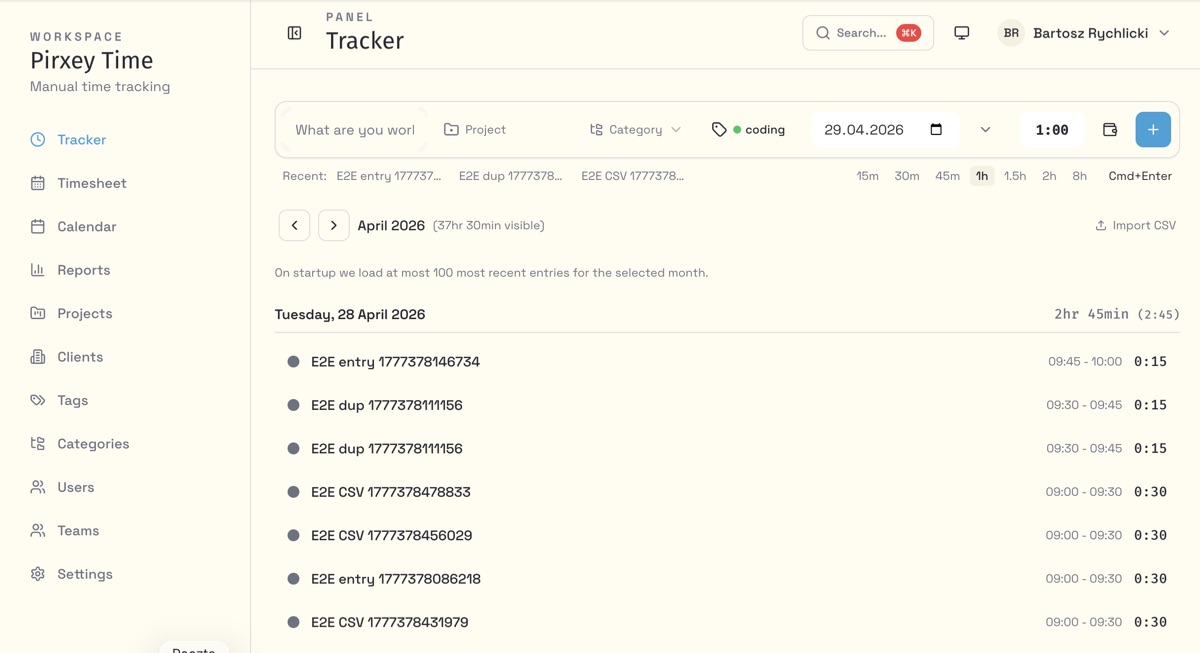
dev, one
pair of hands
company
rollout
For years, custom software was reserved for the largest companies. Expensive, slow to deploy, risky. That’s why small and medium companies chose SaaS tools. Even if they didn’t fit perfectly, they were faster and simpler to get started.
Pirxey started asking a different question:
“Can AI actually help build real, working software today:a system that can handle a company’s daily process?”
That’s how pirxey-os was born. From day one it was about something bigger than replacing a single tool.
Custom software is no longer a luxury. Pirxey stopped fitting the company to the tool and started building a tool fitted to the company.
SaaS works fast at the start.
Then the company starts
fitting itself to the tool.
“I have to do it differently than I need to. This doesn’t work the way our company works.”
Missing features were only part of the problem. Companies rarely have just one SaaS. They start with one tool, add more, glue them together with integrations, until the process is scattered across integrations, exports and spreadsheets.
Time tracking as the first module
of the company’s internal operating system.
AI has changed the economics of building software. A custom system can be delivered faster and cheaper than a few years ago. The conclusion is practical:
If a process is critical, repeatable and expensive in SaaS tools, it’s worth calculating whether it should become its own system.
Diagram — from “Clockify replacement” to company OS, one development path
Six reasons why a custom system beats the next SaaS
From fit, through AI, to the math.
- 01FitThe system follows Pirxey's process.
- 02ConsolidationReplacing several SaaS tools stitched together with integrations.
- 03Ownership, no lock-inThe software stays in the company as its own asset.
- 04Grows with the firmEvery new need becomes the next module.
- 05AI-agent readyA UI for people, API and MCP for agents.
- 06The math worksBuild vs buy: a one-time build and an asset the company owns.
Software that fits the company.
SaaS tools are built for hundreds of thousands of companies at once. Pirxey was one of them, and its process had to adapt to the tool.
pirxey-os works exactly the way Pirxey works. The lower cost comes along with it.
to the tool
to the company
Many processes in one system.
Companies rarely have just one problem to solve. They start with one SaaS, add more, glue them with integrations, until the result is a side effect of decisions made separately.
pirxey-os is one platform. One data model, one permission layer, one place for every process.
Diagram — ~36–93 apps in a typical company (Okta, 2024) → one coherent system
Ownership and no vendor lock-in.
If a process is critical to the company, it’s worth asking: do we want to rent it from a vendor, or own it as a company asset?
A subscription is rent. After four years, all you’re left with is paid invoices and nothing more. A custom system after that same time is a company asset that keeps growing.
The system grows with the company.
The biggest advantage of custom software is that it grows with the company — new processes become new modules.
Every new need becomes the next module of the same system.
Visualisation — every new need is the next module of the same system
Open to AI agents via API and MCP.
pirxey-os exposes data through a public REST API and MCP server, so AI agents can operate the system alongside people using the interface.
- Pirxey Dashboard — 18h 10m
- Med4You — 9h 30m
- Internal — 3h 20m
- Meetings — 1h 40m
The same API and MCP work underneath, used by other agents too
The same endpoint that answers questions in Telegram can be called by an n8n workflow, a Claude agent, or a CI script.
More on this model: BR-Budget case study — a finance app where the primary user is an AI agent.
{
  "tool": "pirxey_log_time",
  "project": "Pirxey Dashboard",
  "task": "Code review",
  "duration_min": 90,
  "date": "2025-06-20"
}And the numbers add up faster
than you’d expect.
Comparing the annual SaaS cost to the one-time build cost of pirxey-os.
- Recurring cost every year
- Roadmap owned by the vendor
- Limited control over the process
- After a year: only paid invoices
- A system the company owns
- Own roadmap and future modules
- Full control over data and process
- After a year: an asset that keeps growing
The goal here is a company asset. The saving comes with it.
This is pirxey-os
in production.
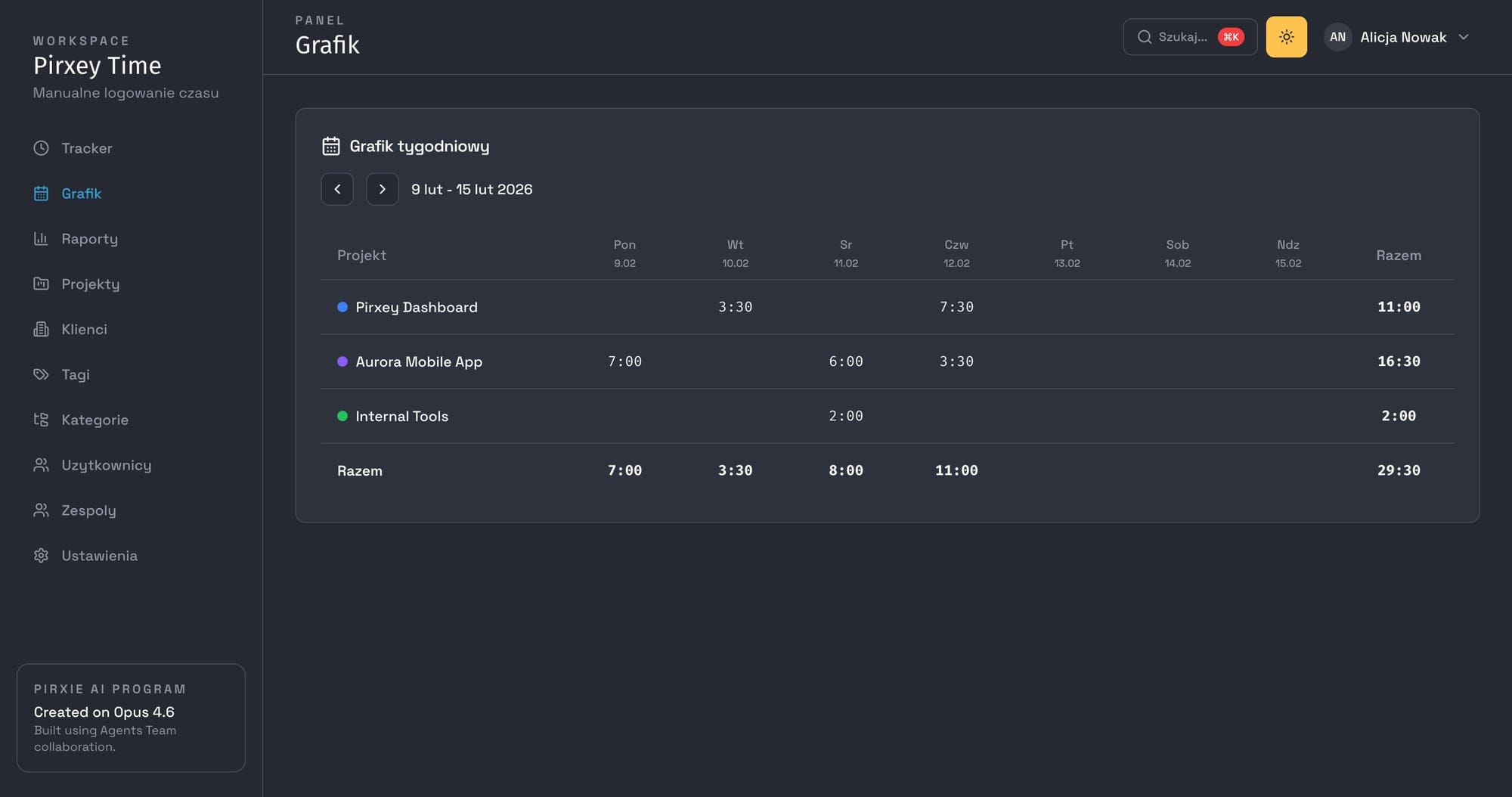
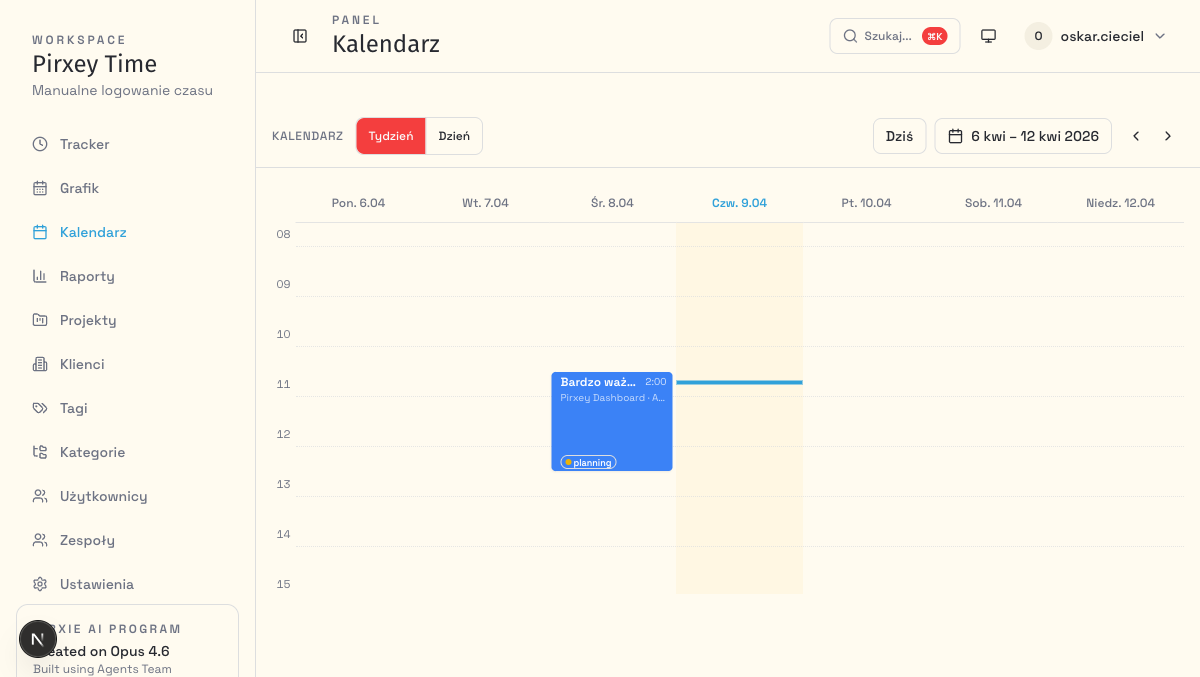
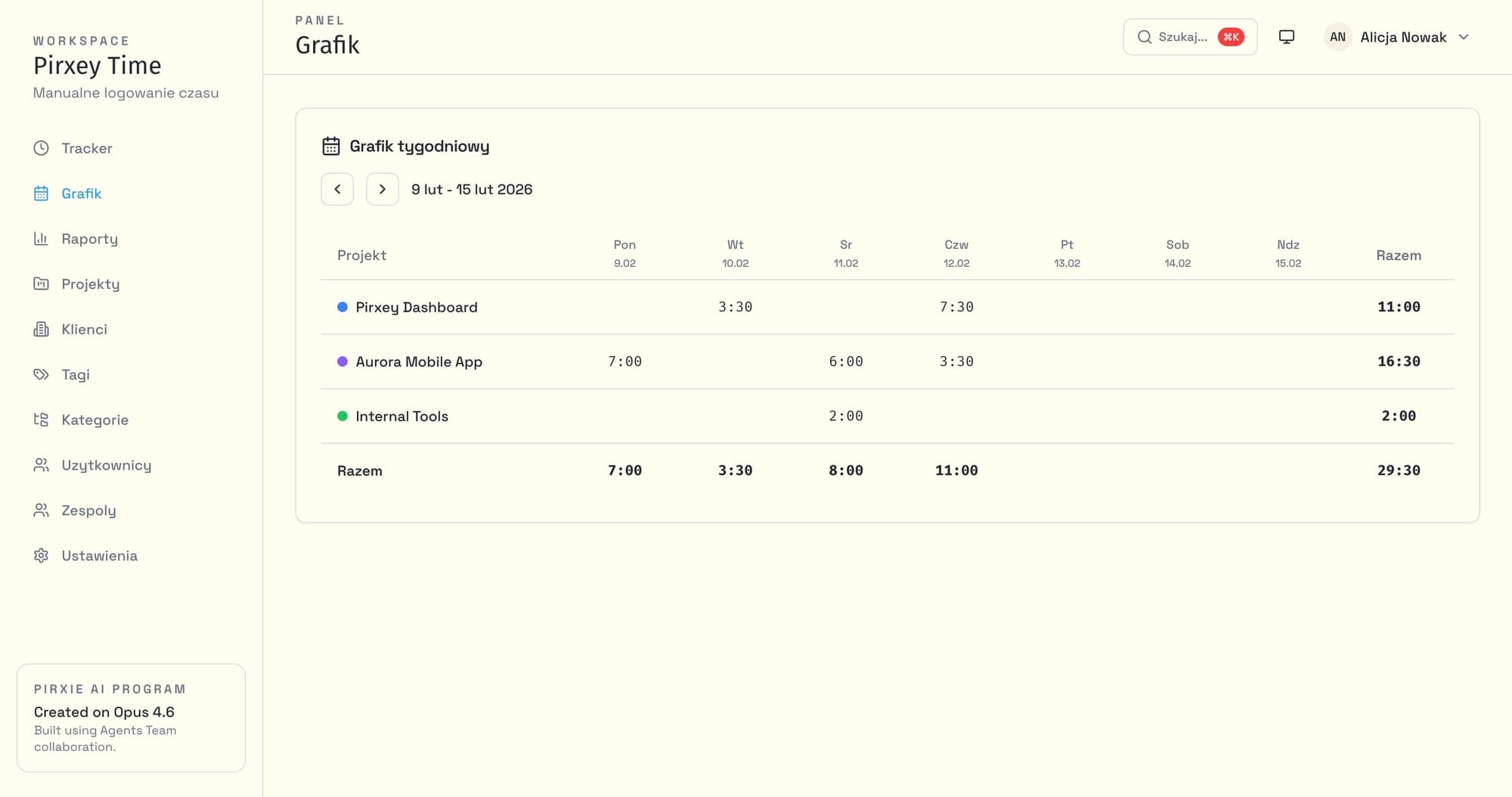
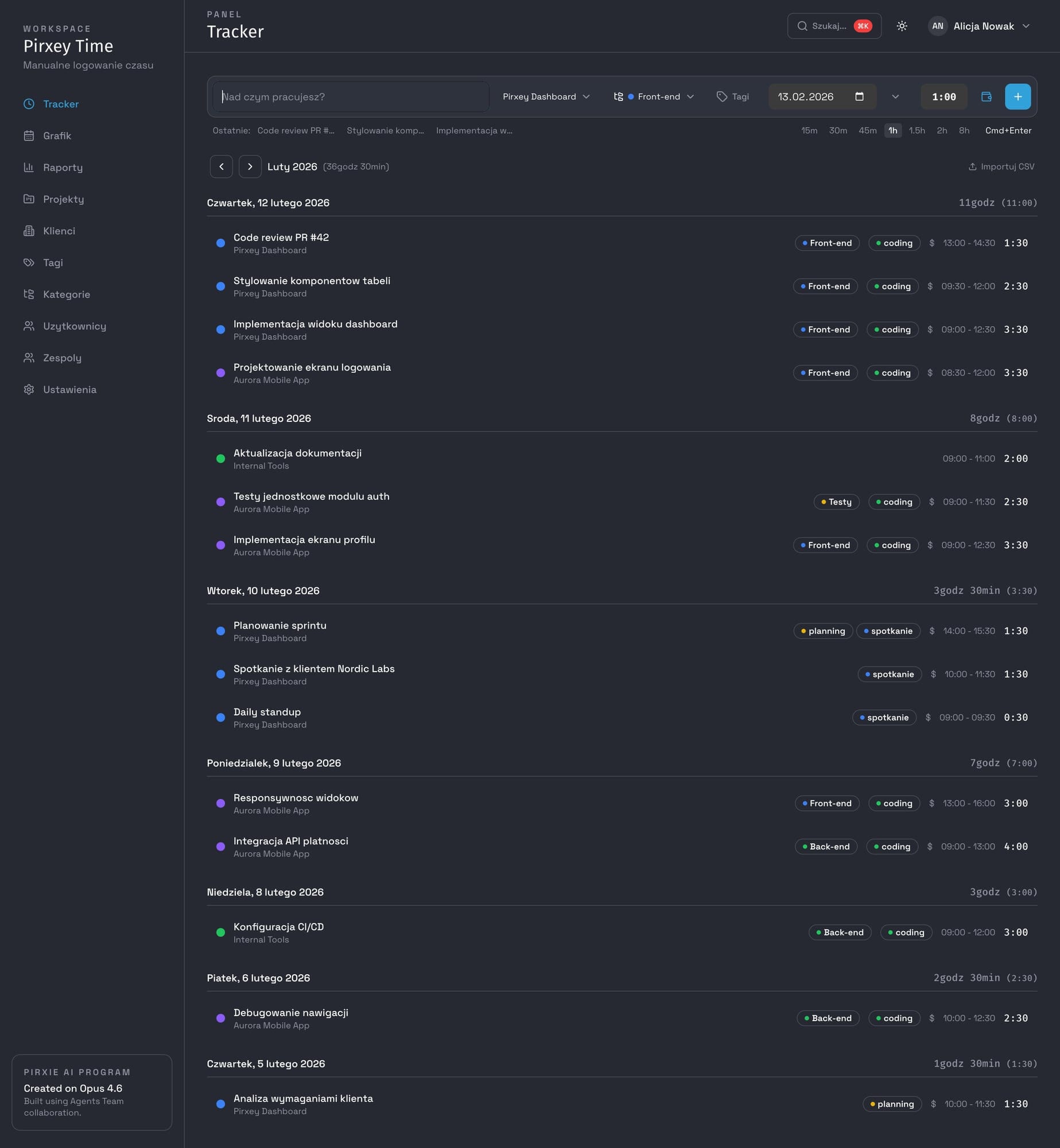
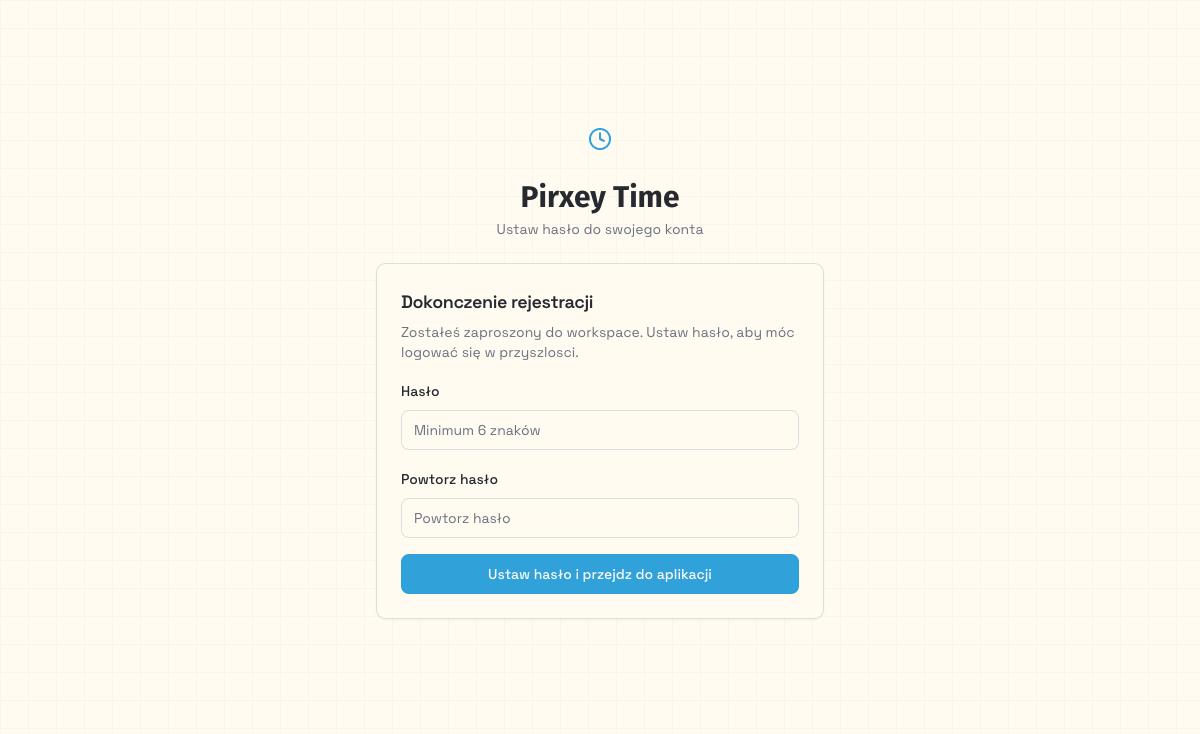
Custom design system built for Pirxey: with colors, components and light and dark mode. Below: some real screens — tracker, schedule, calendar and reports. The same system, different work contexts.

Tech stack
If we know exactly how Pirxey works, why should we fit ourselves to a generic tool? We wanted to see whether we could build a system that works our way: first for time tracking, and later as the foundation for the company’s other processes.
Delivered as a full product —
from architecture to deployment.
This is real software handling a real process in a real company: architecture, application, API, historical data import, security, tests and production deployment. All in one pair of hands, without a software house.
- 01Discovery & architectureUnderstanding how time tracking actually works in a company with 70+ engineers.
- 02System foundationFoundation designed from day one for the full multi-module OS.
- 03Design systemCustom color system, components, light and dark mode.
- 04API & AI integrationsPublic REST API, MCP server, layer for AI agents.
- 05Security & deploymentPermissions, RLS, Sentry, tests, production environments.
Since July 2026 the whole company has been logging time in pirxey-os. The rollout is done and Clockify has been switched off.
Planned next: more processes as modules of the same system, including people, tech profiles, estimates, quotes and tickets.
One system.
One database.
A tool fitted
to the company.
pirxey-os replaced Clockify and gives the company one platform for its processes. The system fits itself to the company.
And it stays in the company as an asset.
Interested in your own system?
If you’re paying for SaaS that forces workarounds, let’s check whether a custom module would be cheaper and better fitted to your process.
Business-first CAIO · designer · developer. I build systems from idea to deployment: solo, with AI as the tool.